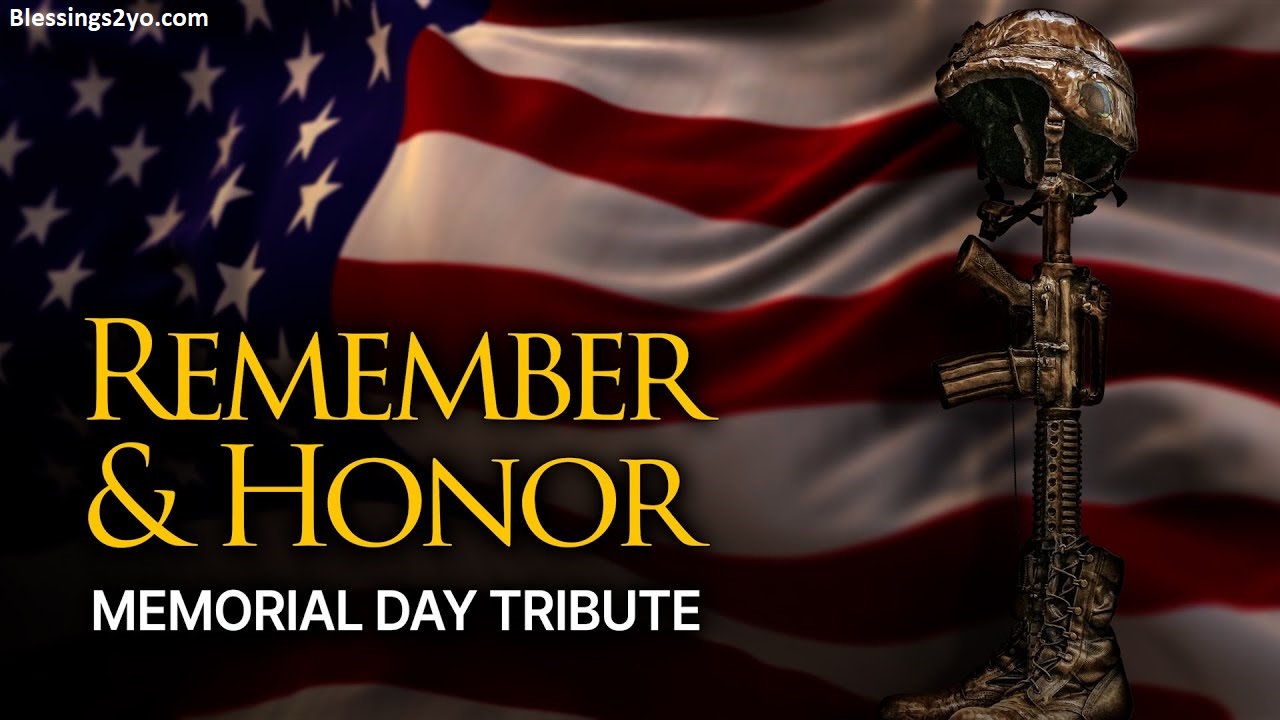
Memorial Day is a solemn American holiday observed on the last Monday of May, dedicated to honoring the men and women who died while serving in the United States armed forces.
Originally known as Decoration Day, it traces its roots back to the years following the Civil War, when communities gathered to decorate the graves of fallen soldiers with flowers and flags.
Today, Memorial Day is marked by parades, memorial services, and visits to cemeteries and war memorials across the country. Many Americans also pause for a moment of silence at 3 p.m. local time. It also unofficially marks the beginning of summer.
Table of Contents
Quick Table
| Aspect | Details |
|---|---|
| Date | Last Monday of May |
| Purpose | Honors military members who died in service |
| Origin | Began as “Decoration Day” after the Civil War |
| First Observed | 1868 (officially) |
| Became Federal Holiday | 1971 |
| Key Traditions | Parades, flag placement on graves, moment of silence (3 p.m. local time) |
| Common Confusion | Not the same as Veterans Day (honors all who served, not just the deceased) |
| Also Marks | Unofficial start of summer in the U.S. |
What Hosting Memorial Day Taught Me
The first time I hosted a Memorial Day cookout, I bought way too much ground beef, forgot to tell anyone what time to show up, and spent half the afternoon explaining to my neighbor’s kid why we weren’t “celebrating a holiday” so much as remembering something heavier.
That was eight years ago. I’ve hosted every year since, and I’ve made just about every mistake you can make — burnt burgers, awkward toasts, a Bluetooth speaker that died mid-playlist, and one memorable year where I completely blanked on the fact that half my guests were vegetarian.
So this isn’t a history lesson. You can get that from a museum website. This is what actually happens when you try to do Memorial Day right — as a host, as a guest, as someone who’s lost family members who served, and as a person who just wants the long weekend to feel meaningful without feeling like a chore.
It’s Not Just “The Unofficial Start of Summer”
I get why people call it that. The pools open, the grills come out, the mattress commercials start playing on a loop. But somewhere along the way I started noticing how many people — myself included, for a long time — treated it as pure vacation without any of the weight behind it.
My grandfather served in the Navy. He never talked about it much, but every year around this time he’d get quiet for a day or two. I didn’t understand that as a kid. I do now.
Memorial Day exists specifically to remember service members who died while serving — not veterans generally, not the military as an institution, but the people who didn’t come home. That distinction matters more than most people realize.
Veterans Day in November is for thanking everyone who served. Memorial Day, in late May, is for remembering the ones who were lost. Mixing the two up isn’t a huge deal at a backyard barbecue, but if you’re at a ceremony or talking to a Gold Star family member, getting it right shows you actually understand what the day is for.
What a Decent Memorial Day Weekend Actually Looks Like
Here’s roughly how mine has evolved after years of trial and error.
Friday night: low-key, no pressure
I stopped trying to cram everything into Monday. Now Friday is for grocery shopping and prepping — not for events. If you’re hosting anything, this is the night to marinate meat, chill drinks, and figure out seating. Trader Joe’s and Costco both get slammed the Friday before Memorial Day, so if you’re going, go early or go late. I learned this the hard way standing in a checkout line that wrapped around the entire store.
Saturday or Sunday: the actual remembrance part
Most towns have some kind of ceremony — a parade, a wreath-laying at a veterans’ memorial, a moment of silence at the local cemetery. I used to skip these because they felt formal and a little uncomfortable. Now I go, even if it’s just for twenty minutes. It changes how the rest of the weekend feels. You don’t need to make a big production of it. Just show up, be quiet, pay attention.
If you don’t know what’s happening locally, a quick search for “[your town] Memorial Day ceremony” almost always turns something up, or check your city’s Facebook page — that’s usually where these get posted, not on fancy event sites.
Monday: the cookout, done right
This is where most people actually spend their day, and there’s nothing wrong with that — as long as somewhere in there you take a minute to acknowledge why you have the day off in the first place.
A few things I wish someone had told me before my first few cookouts:
- Don’t over-order meat. I used to buy based on guest count times some arbitrary number. Now I do half a pound of protein per adult, tops, and I always ask ahead about dietary restrictions instead of guessing.
- Charcoal grills need way more lead time than you think. If you’re using charcoal instead of propane, start it at least 45 minutes before you want to cook. I’ve had guests standing around hungry because I underestimated this more than once.
- A cheap Bluetooth speaker will die on you. Invest in one with real battery life — something like a JBL Flip or a similar mid-range speaker — or you’ll be stuck fumbling with your phone’s tiny speaker at 6 PM when everyone’s still there.
- Set a rough time window when you invite people. “Come by whenever” sounds relaxed but it means you end up cooking three separate rounds of food for people trickling in over four hours.
If You’re Traveling Instead
Memorial Day weekend is one of the heaviest travel weekends of the year — AAA usually reports it as one of the top three busiest of the summer. If you’re driving, a few things that have saved me:
Use Google Maps or Waze and actually check the “leave by” suggestions the night before, not the morning of. Traffic on Thursday evening and Friday morning is brutal on most interstates. I’ve had a normally two-hour drive turn into four and a half hours because I left at the wrong time.
If you’re flying, book your TSA PreCheck appointment or Clear membership well before the holiday if you don’t already have it — the lines at major airports on the Friday and Sunday of this weekend are no joke. I stood in a security line for over an hour at a mid-size airport a couple years back because I assumed it’d be like any other Sunday. It wasn’t.
Mistakes I See People Make Every Year
Forgetting the flag etiquette. If you fly a flag, it should go up to full staff at sunrise, then be lowered to half-staff until noon, then raised again for the rest of the day. This is actual, official protocol from the U.S. Flag Code, not just a suggestion. Most people don’t know the half-staff-until-noon part.
Treating red poppies as decoration without knowing why. The poppy tradition comes from the WWI poem “In Flanders Fields” and became a symbol for remembering fallen soldiers. If you see people wearing or distributing them, it’s usually tied to veterans’ organizations raising awareness or funds — not just a springtime aesthetic choice.
Sending a generic “Happy Memorial Day!” text to everyone in your contacts. I did this for years before a friend gently pointed out that her brother didn’t come home from deployment, and “happy” isn’t really the word for what that day means to her family. Now I just say something like “thinking of you this weekend” to people I know have lost someone in service, and save the cheerful stuff for casual acquaintances.
Assuming every veteran wants to talk about their service. Some do. A lot don’t, especially around this specific holiday. Let them lead that conversation instead of asking direct questions about combat or loss.
A Few Small Things That Actually Made a Difference For Me
A couple years ago I started doing one simple thing: before the food comes out at my cookout, I ask everyone to take thirty seconds of quiet, and I say a name or two of people in my own family or my guests’ families who didn’t come home. It’s not preachy, it’s not long, and honestly the first time I did it, it felt awkward. Now people expect it and a few have thanked me for it afterward.
If you’ve got kids around, this is also a good moment to explain the difference between “why we have a day off” and “why the day exists.” Kids pick up more than we think.
My neighbor’s daughter, the same one I fumbled an explanation to years ago, now asks every year if we’re going to “do the quiet part” before we eat. That stuck with her more than the burgers did.
FAQ’s
What is the difference between Memorial Day and Veterans Day?
Memorial Day honors military members who died while serving, while Veterans Day celebrates all who have served, living or deceased.
Why is Memorial Day observed on the last Monday of May?
The Uniform Holiday Act of 1968 moved the observance to the last Monday of May to create a three-day weekend, starting in 1971.
What was Memorial Day originally called?
It was originally called Decoration Day, referring to the practice of decorating soldiers’ graves with flowers.
Is it appropriate to say “Happy Memorial Day”?
Many people prefer phrases like “Memorial Day” or expressions of remembrance, since the day is meant for solemn reflection rather than celebration, though the long weekend is also enjoyed by many.
What is the National Moment of Remembrance?
It’s a tradition asking Americans to pause in a moment of silence at 3 p.m. local time to honor the fallen.
Conclusion
Memorial Day stands as one of America’s most meaningful holidays, blending solemn remembrance with national gratitude. What began as a grassroots effort to decorate the graves of Civil War soldiers has grown into a nationwide day of honor for all who died in military service.
While parades, cookouts, and the unofficial start of summer have become part of the modern celebration, the heart of the day remains rooted in respect and reflection.
Taking a moment to pause—whether through visiting a memorial, attending a local ceremony, or simply observing a moment of silence—helps preserve the true spirit of the holiday.
As traditions evolve, Memorial Day continues to serve as a powerful reminder of the sacrifices made for freedom, ensuring that the memory of the fallen is never forgotten.
Whether through personal reflection or community events, this day connects generations, past and present, in a shared act of national gratitude.